Will We Learn Together for Change..?

In September this year, the member-states of United Nation will agree upon a new Global Development Agenda that will come into force 1st of January 2016. The current Millennium Development Goals, MDGs, will be replaced by 17 new Sustainable Development Goals, SDGs. In the new agenda, Goal 4 is about education. Unlike the MDGs, this goal is not only limited to reassure enrollment in primary school, but it also includes provision of qualitative and affordable secondary and higher education, as well as possibilities for inclusive research. vicepresidentNevertheless, the reality we are facing right now is quite different, and this Goal will meet many challenges. The main question might be how we will manage to provide education for all, which leaves no one behind?
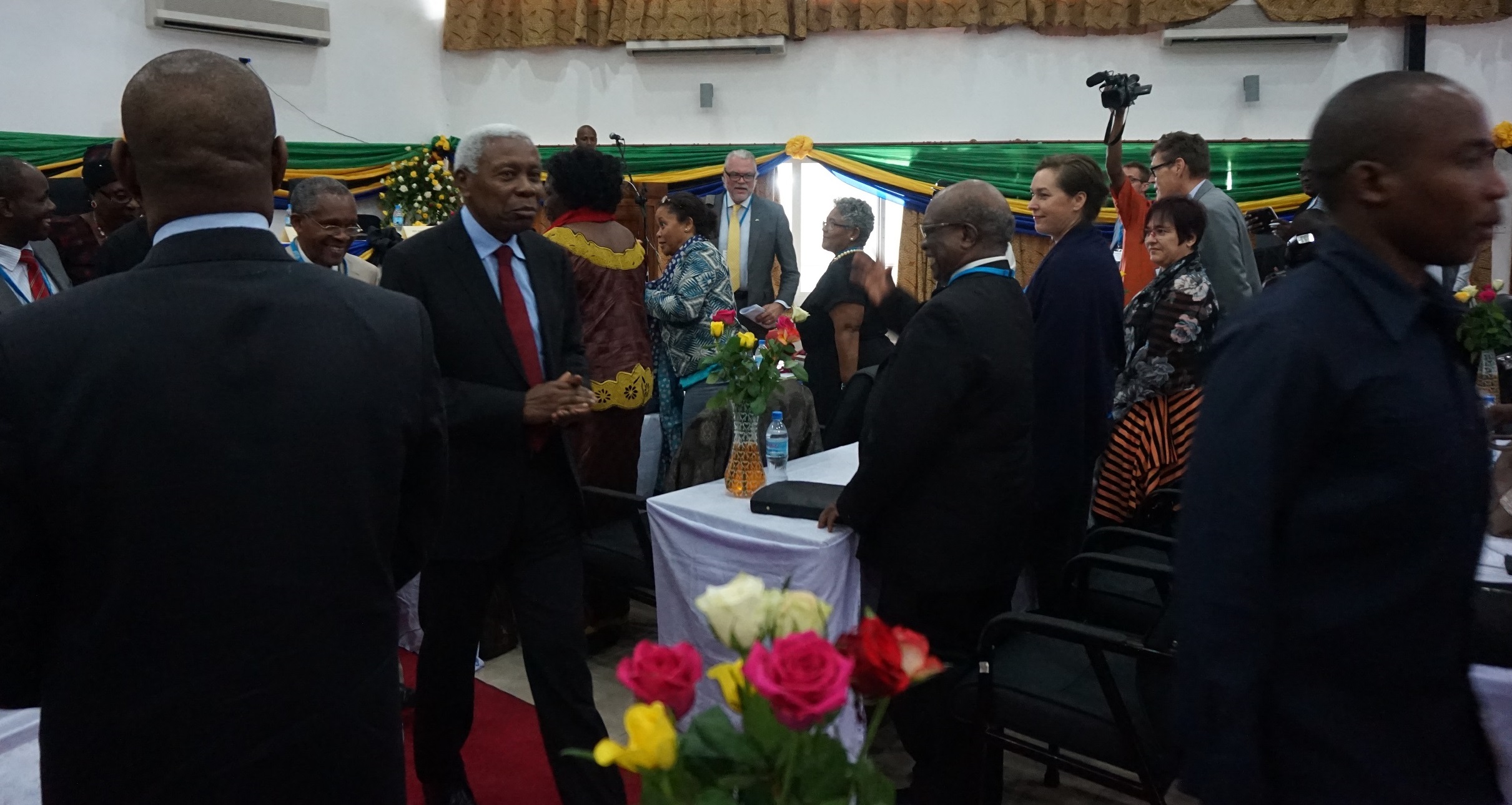
Last week, I participated in the conference “Learning Together for Change, Advancing Education for All through Higher Education” in Arusha, Tanzania. It was an interesting conference with around 160 representatives from 24 African and 15 Swedish universities. As the youngest participant, and a student of International Relations (doing a research about Higher Education for Females in Tanzania) it was an interesting forum to gain more knowledge in the field, and an understanding of the African context. There are certainly great differences when it comes to education in this large continent!

Currently, many African countries are doing well when it comes to the enrollment of pupils in primary education. Most children, both boys and girls, are enrolled in primary school. But far from all are completing the primary level of education. Even fewer continue to study in secondary school. Very few succeed to travel the long journey towards Higher education. And a very small number of students are able to receive a university degree.

DSC01757

Thus, during the conference, we were discussing the challenges that prevent us from providing education for all, at all levels here in Africa. Some of the problems we discussed are the issues of drop-outs from schools, the financial difficulties many families meet, the cultural norms and practices, the issues of early pregnancies and child marriages, the gender expectations, the gaps between the urban and rural areas, the poor training of teachers, the sometimes poor quality of the education provided, and the low salaries and status for the teachers and principals. Some countries, such as South Africa, has come far to meet these challenges, whereas many difficulties remains in countries such as Tanzania.

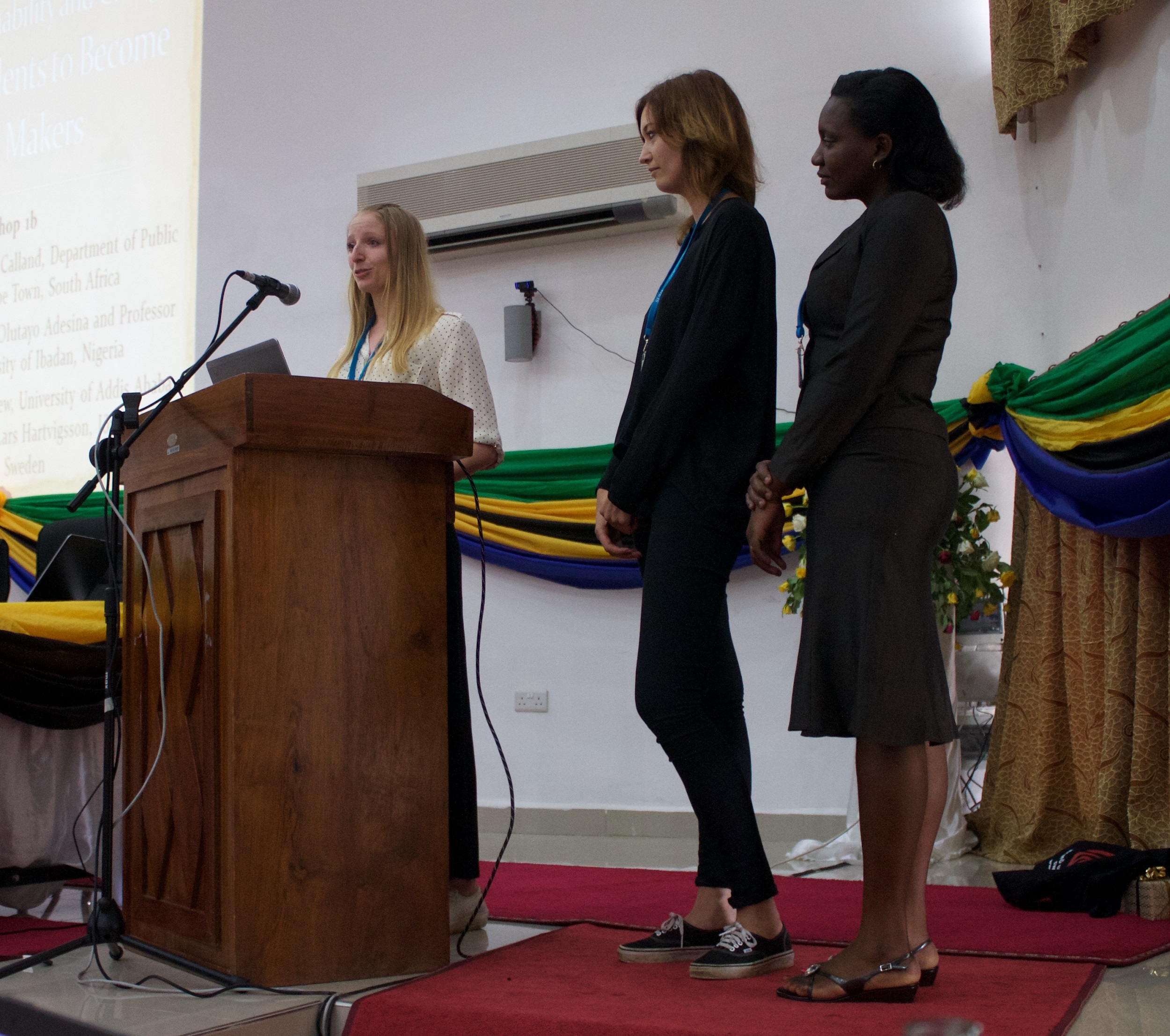
Moreover, all participants in the conference took part in two workshops to further discuss some of these obstacles. There were totally eight workshops. I was joining the ones titled: “Education for All and Higher Education in a CRC context (the Convention of the Right of the Child)” and “How to Prepare Students to Become Change Makers”. 17123135090_a5e46baaef_oTogether with two other young women, I was presenting the results from the workshop “How to Prepare Students to Become Change Makers”. It will not be an easy task, and many actions and cooperation between countries are needed to meet the challenges.
To sum up, the aim of the three days long meeting was to exchange educational experience from the 20 different countries represented, and try to learn together to improve education. Additionally, conclusions from the workshops will be reported to the UNESCO World Education Forum in South Korea 19-22 of May, where the post-2015 education agenda will be discussed in more detail.

I am looking forward to see how this will develop!


The blog was originally published on:

http://fufkorrespondenterna.com/2015/05/08/will-we-learn-together-for-change/

Sustainable safari in Tanzania?

To suddenly stand face to face with a wild lion is a thrilling experience. You caught yourself holding your breath, and almost not daring to blink. You see his majestic body moving smoothly over the road, and he continues to walk slowly over the savanna.DSC01426 In the next moment another magnificent creature comes out from the bushes: a female lion. They watch each other. The female looks suspicious, seemingly measuring the male with her graze. The male lion begins to walk towards her. We are all watching the scene with exhilaration. Will she approve his move? No.  When he comes closer, she turns around and walks in another direction. Well, better luck next time Simba (lion in Swahili).

Moreover, now someone else is getting our attention. It is a Masai approaching us with his goats. I can feel that my body freeze. The Masai is walking in the same directions as the lions just have disappeared. And worse, his movement has not gone unnoticed from the lions’ eyes. I can suddenly see several lions walking out from the bushes. Six of them are now watching the lonely Masai. I feel uncomfortable. How will this end..? Should we interfere?

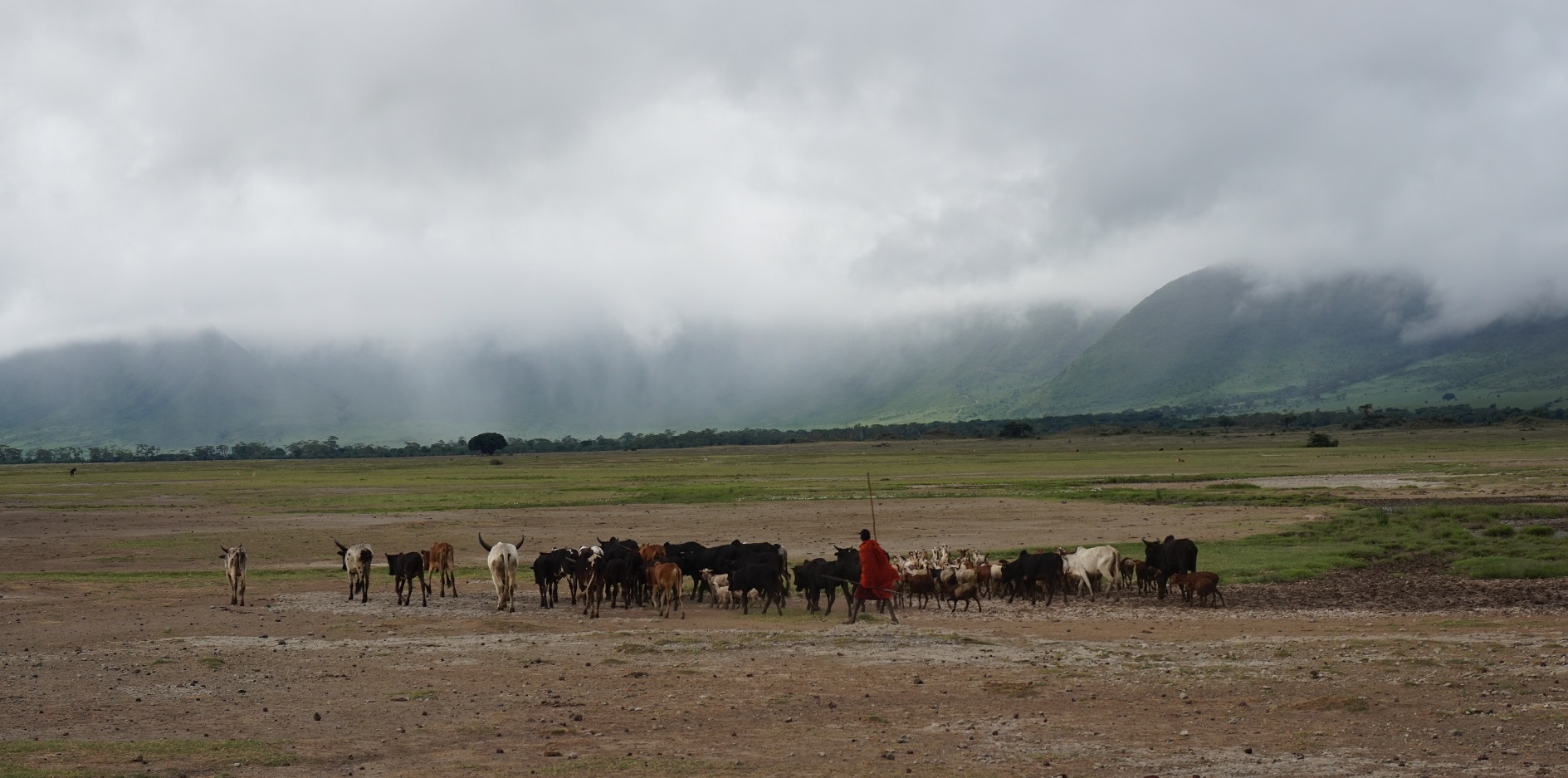
Well, my unease seems to be needless. The Masai, apparently aware of the situation, leaves his goats and walk towards the male lion. He stops and stares at the lion; challenging him with his gaze. They stand like that for a while. Then, the Masai calls his goats, and they walk calmly over the savanna. They are passing the lions without any problem.  DSC01403The lions just watch him proceed with his goats. I am impressed. It is fascinating to see how people and animals can live in some kind of symbiosis with each other.


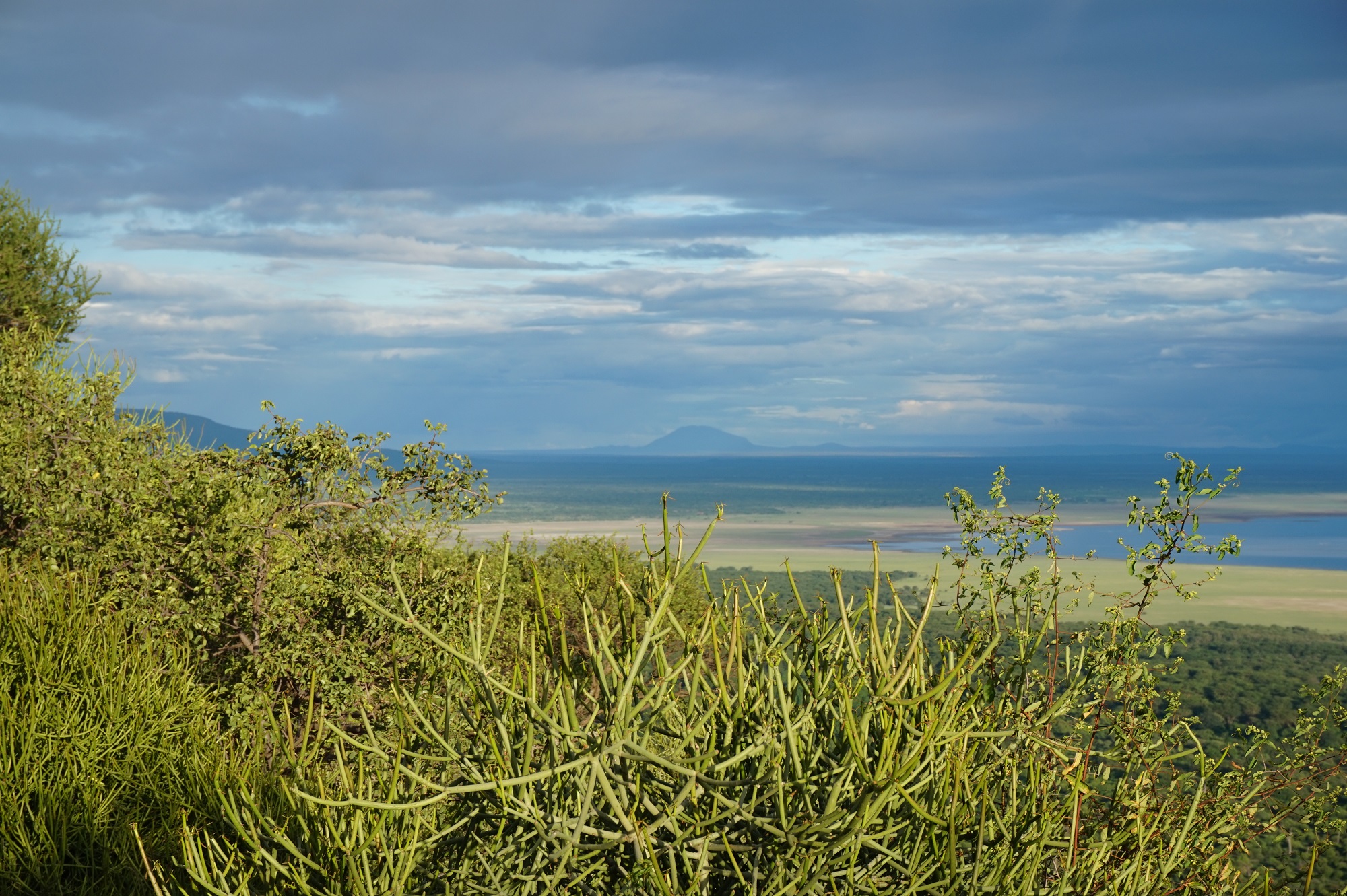
When I, a few days ago, was on a safari-tour with a group of people from Sweden, we visited Lake Manyara and the Ngorongoro crater in Tanzania. During the safari, we saw many remarkable animals and stunning landscapes. It was amazing.

However, I couldn’t help myself from wondering if these safaris are sustainable? Does our presence interfere with the daily lives of the animals that are living on the savanna? Have the animals become used to the safari jeeps driving there every day? How does the jeeps pollution impact on the environment? And, do the safaris result in benefits for the Masai’s who own the land we are visiting during the safari-tour?

To know what actually should be considered sustainable tourism is a complicated question. As a tourist, you never know if you do harm or good. You always have several aspects to deliberate. On the one hand, the tourists pay the park fee, which contribute to the status of the land being a national park, which give the savanna protection. It also includes some small economic support to the Masai’s. On the other hand, the people’s presence might stress the animals. It might impact on the environment that various jeeps are crossing the savanna on a daily basis, stopping so the people can take DSC01230pictures. Moreover, there is also risk of hitting the animals belonging to the Masai’s. More than once, we almost hit the goats and the cows when we’re driving in the National park.

The safari left me with mix feelings. I am delighted to have seen these marvelous animals, but also troubled if I have supported something that might interfere with the people and animals everyday life. How can safari’s be organized to be more sustainable? And how can I know what I contribute to?


This blog was originally publiced on Fuf-korrespondenterna: http://fufkorrespondenterna.com/2015/05/02/sustainable-safari-in-tanzania/

Being sick…

It’s Friday night, and I am in a room. One of the walls is damaged. It looks quite old, and a little dirty. The light is not functioning properly; the shed that comes from it gives me an odd feeling. There is a tap in the corner. Water is running from it, and it leaves black marks in the sink. Different things are spread all over the place. There are bars in the windows. I don’t feel well…

Am I in a prison-cell?

No. In front of me there is an angry-looking woman with a needle in her hand. She wants to take a blood-test. I am in a hospital… Suddenly, I cannot help myself, but I start to laugh. I cannot stop laughing. The whole situation is so bizarre. The nurse looks at me with a strange look in her face. She asks me in a very harsh tone what is so funny? hospitalBetween my laughter I try to explain to her that the situation is so different from what I am used to, and then we are both laughing. It feels better. She takes the needle from the sterile package, and she completes the blood-tests. Now she dosen’t look angry any longer: she is smiling and we are talking a bit in Swahili. Soon, I am off to the doctor in the next room, and two hours later, I am on my way back home: with two different kinds of antibiotics. I should soon be cured, the doctor promised. After four days of vomiting and high fewer, and I am looking forward to be healthy again.

Being sick in another country is always a challenge. You never know how the health system works. You don’t know what is the best option to choose, who you should contact, or which hospital you should visit. You don’t know how you should describe your symptoms, or if the medicine given to you actually will help.

During my third week in Tanzania, I was sick in Dar es Salaam. Nevertheless, I was blessed to be surrounded by new and supportive friends, which helped me to maintain a good spirit, despite my symptoms. Every day, my friends helped me to buy water and food, provided me with resorb (against dehydration), kept me company when I was not sleeping, or called me to ask how I was feeling. They looked up hospitals to me, and accompanied viewme during both my hospital visits. Thanks to this, I never felt alone or afraid. They helped me through some challenging days. I am very grateful to be surrounded by so many lovely people.

Asante sana marafiki yangu!

Dar – The City of Contrasts

If I didn’t see the sunrise and the sunset every day, I would have a very hard time to tell how long time has passed since I arrived. No day is the other day alike. One day here almost feels like a week somewhere else. There are so many new impressions, so many new surprises. I have been in Dar es Salaam for a bit more than two weeks now, and one thing that hits me every day is the vast contrasts this city offers.

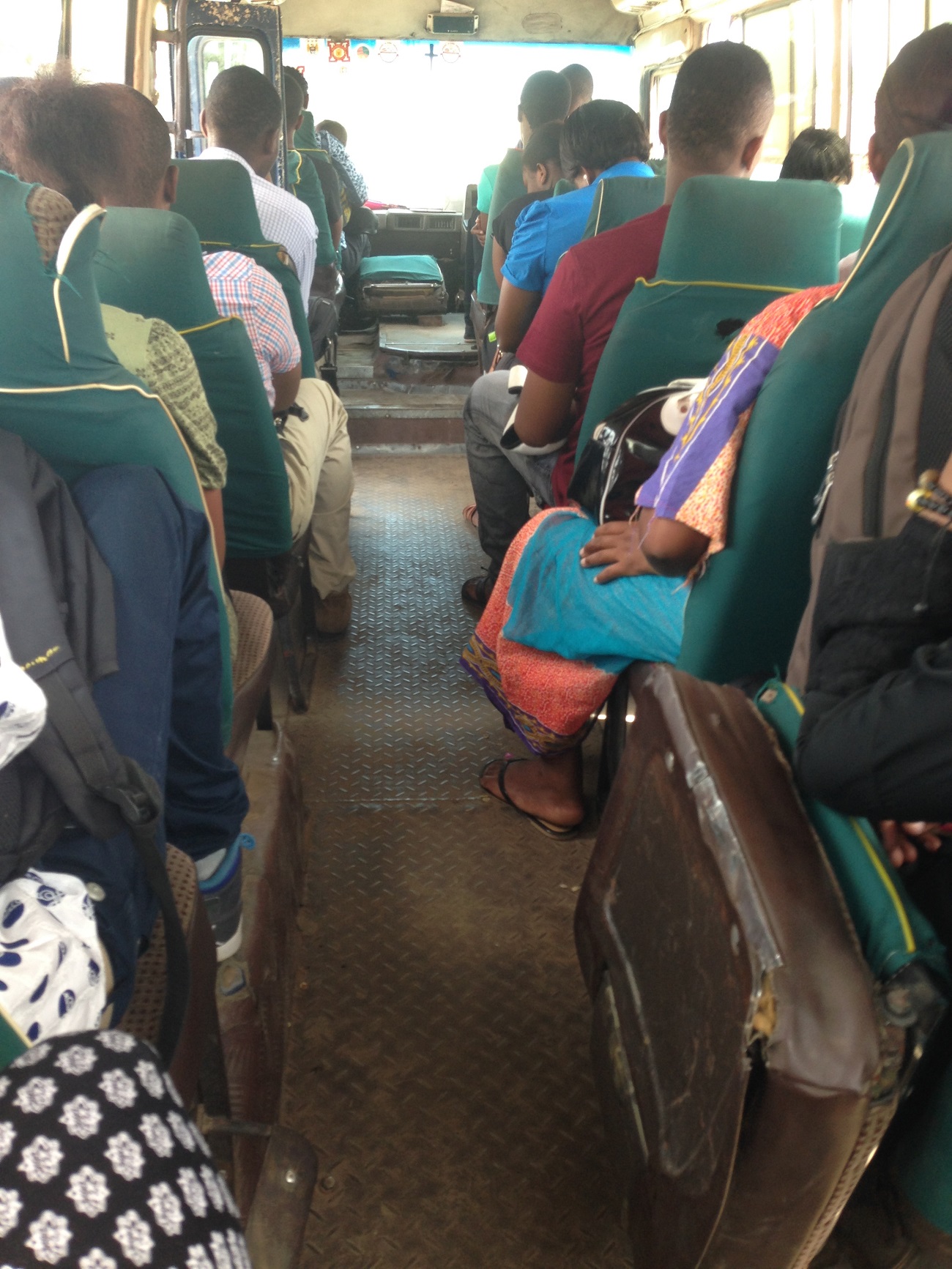
IMG_2871For the last couple of weeks, I have been able to travel between different parts of society. From meetings with highly respected professors from Western well-known universities; to having dinner and drinks with people from the World Bank; to discuss development- issues with international and local NGOs; to meet local students; to talk to people who are trying to make a living from different small business; to see how the lower middle class is living; to go to the beach, and for a day feeling like a tourist… My life these weeks has been shifting. I have experienced the more simple life of the middle class in Dar. Travelling as they do, getting stuck in traffic jams, and standing in the dala dala (the local small bus) for hours without being able to move much, sweating a great deal, as well as walking through the flooded roads, and eating local food (rice and beans) at traditional places. From this, to the life of the expats: having fancy dinners in the top-roof restaurants in the city-center, and relaxing time in the tourist areas. I must say that the contrasts are striking.

DSC00593

These experiences can be seen as an expression of being privileged. I am a white young woman from a Western country, which might be the factor that enables me to travel between these different worlds, and be able to return to my safe hostel in the end of the day.

However, I am grateful that I didn’t do this trip at an even earlier age, because it is challenging. When I listen to Tanzanian students who have devoted their whole soul to somehow be able to pay the tuition-fees a little bit longer, and make their dream of education come true, I cannot help to compare it with my own situation. I was luckily born in a country where we have a system with free education, a monthly student-grant, and even can be awarded scholarships to write our theses in another country of our choice… Again: the contrasts.

So, to be white in some senses means to be advantaged. We may still have the opportunity to do things that others are not able to, and for this I believe that we should be very grateful. (And I also believe it is wrong, and it’s a quite post-colonial-mindset.)

Nevertheless, being a white woman here also includes many challenges. You can never walk un-noticed in the streets, IMG_2939never take the bus without getting many other offers of transportation, never be sure if the people you meet are helpful and friendly of good intentions (as I believe most people here are) or if you have met some of the few that just want to use you or hurt you. It is hard to tell when you should be suspicious and when you just should be thankful…

Thus, every day here is a challenge, and at the same time: a new adventure.

Livet i verkligheten

Tjo,

så efter en kvick touchdown i Mexiko för drygt 2 veckor sedan har jag tagit till San Cristóbal de las Casas dock har jag inte direkt hunnit uppleva så mycket av staden (som jag kommer spendera större delen av min tid i Mexiko i). Detta pga att jag var först skulle fortsätta till Zaptisternas autonoma samhälle ”La Realidad”.

Det är där jag nu alltså spenderat de två senaste veckorna, sedan siste mars tills i lördag (11/4). Eftersom där varken fanns internet eller täckning ”ute i djungeln” tänkte dela mina upplevelser under tiden i några kommande inlägg som jag kan posta nu i dagarna.

Så varför åker man till ett ställe utan internet, täckning och begränsad tillgång till elektricitet?

För somliga är svaret på den frågan lika svår som svaret på meningen med livet. Men för mig som freds- och konfliktvetenskaps student är det givet att intressera sig för och studera konfliktmiljöer och rörelser som agerar inom dessa.

Som en bakgrund till detta finns här snygg 3-mins animationsfilm som ger en smidig introduktion till Zapatismo och Zapatiströrelsen, för den som intresserar sig (förhoppningsvis alla)…

Men jag försöker även här ge min egna väldigt svepande bakgrund.
För tro det eller ej, fast man inte hör något på tv så finns det en i allra högsta grad pågående konflikt i delstaten Chiapas. Där har länge funnits sociala spänningar något som 1994 mynnade ut i ett uppror. Bakom upproret stod EZLN (Ejército Zapatista de Liberacion Nacional) och zapatiströrelsen grundad i framförallt ursprungsbefolkningens krav på jämlikhet, rättvisa, demokrati och frihet. Helt enkelt krävde de grundlägganden elementen till ett värdigt liv som de länge hade blivit förnekade. Sedan 1994 har EZLN övergått till att bara använda ordet som vapen, samtidigt som man sökt dialog, något som lett till många oinfriade löften från regeringen som fortsatt sin militära kampanj av ”upprorsbekämpning”. Därför har Zapatisterna i strävandet efter sina ursprungliga mål fortsatt att försöka försörja för sig själva genom att skapa egna skolor, hälsokliniker och arbetarkooperativ inom sina autonoma samhällen.

Anyway

Det är alltså till ett av deras samhällen jag har begett mig, La Realidad, cirkus en 6 h resa på slingrig väg från San Cris ut i djungeln. För somliga har detta låtit som att bege sig djupt in i drogkartellernas territorium, för vissa var man där redan när man kom till Mexiko, men lite paradoxalt kan tänkas så är all form av droger och alkohol förbjudet i Zapatist samhällena. Dock finns det lite mer fog för oro över regeringens militarisering av områdena samt deras sponsring av paramilitära grupper som är aktiva i området.

DSC07252 (1024x768)
Först anblick av La Realidad

Men hur som haver ut i djungeln skulle vi! Med vi menar jag ett härligt gäng på 20 pers. Om jag inte minns fel från 12 nationaliteter, alltifrån Mexikanare till brasilianare, australiensare och tyskar. Alla med olika bakgrunder, enade i sitt intresse för Zapatisterna som mynnat ut i en gemensam målsättning att hjälpa Zapatisterna måla muraler.

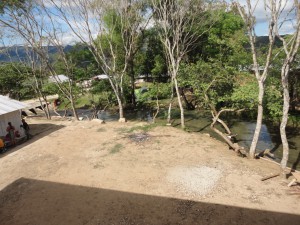
Kanske inte helt oväntat fick vi punktering på vägen så blev fördröjda en timme. Men väl på plats välkomnades vi av Zapatisterna och inkvarterade oss vid deras nybyggda skola, idylliskt beläget vid en liten bäck, de kommande två veckornas badplats.
Antalet nyanlända till det lilla samhället lockade till sig sin beskärda del av nyfikna barn, kanske mest nyfikna va de på den udda ”guerro” som anlänt eller bilen full med 200 L färg.

DSC07084 (1024x768)
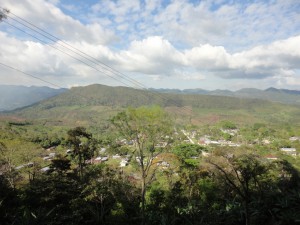
Utsikten från vårt ”camp”

Sjukt nöjd med att vara på plats kunde man gött somna i sin hängmatta samtidigt som man försökte smälta alla intryck och två bastanta portioner av frijoles (bönor).

Här bjuder jag på fem (relativt) korta förklaringar av begrepp som inte går att ducka för:

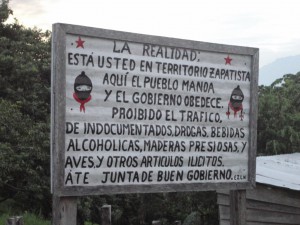
La Realidad? – ”Mother of caracoles”, Autonomt Zapatistiskt område i uppror ”Donde manda el pueblo y el gobierno obedece” (Där folket bestämmer och regeringen lyder). Ligger i djungeln med ett lagom varmt klimat ingen svensk hade klagat på.DSC07291 (1024x768)

Autonomi?- Om det tvistas de lärda, kort och gott självbestämmande. Praktiserat i Zapatistiska samhällen ex genom att man inte tar emot något från myndigheter utan försörjer sig själva med egna kliniker, skolor och rättsväsenden.

Caracol?- Snigel på spanska(inte ovanligt att se målningar med en Zapatist-snigel och orden ”lento pero avanzo”), men också regioncenter där den autonoma regeringen sitter, aka la Junta de buen Gobierno. I regeringen sitter inga yrkespolitiker utan bönder som strävar efter rättvis fördelning av resurser inom samhället.

Mural?- En väggmålning, ofta med politiska förtecken. Mexiko har en stor tradition av muralister (Diego Rivera, David Alfaro Siqueiros eller José Orozco).

Emiliano Zapata vem?- Natonalikon, red tillsammans med Pancho Villa under Mexikanska revolutionen 1910 och ledde bonderevolutionen som krävde jord till de jordlösa, tierra y libertad. Det är från honom, surprise surprise, som Zapatisterna fått sitt namn.

Well well, detta får räcka till att börja med. Skulle man intressera sig mer finns det tonvis med information om zapatisterna. Kommer snart ett inlägg till med lite fräna bilder från vad vi hittade på…

Stay tuned

/Simon

Karibu Tanzania!

”Mambo!”, ”Habari!”, ”Mzima!”, ”Salama dada!”, ”Karibu Tanzania!”

Almost everywhere I go in Dar es Salaam (not least in Mikocheni, where I am staying for the moment) people are greeting me with friendly words. “Hi, how’re you?”, “Peace, sister”, and “Welcome to Tanzania”. It’s hard to pass anywhere in the streets without getting attention.  Even though there are numerous white people here, I get the feeling that some locals are getting curious when they see a white person, a mzungu, and especially the kids. People salute you, and when you respond, many of them get surprised, but excited, and they continue talking in Swahili.

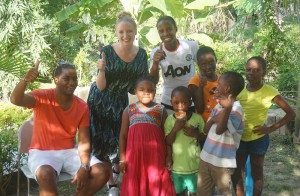
Easter dinner with new rafikisThey welcome you to Tanzania, and want to get to know you. However, far from all Tanzanians speak English. Therefore, to be able to interact more with the locals, I have signed up for two weeks of Swahili classes here in Dar es Salaam. And so far, I have really enjoyed learning Swahili! As soon as I picked up a few words, the Tanzanians have been extra friendly and helpful!
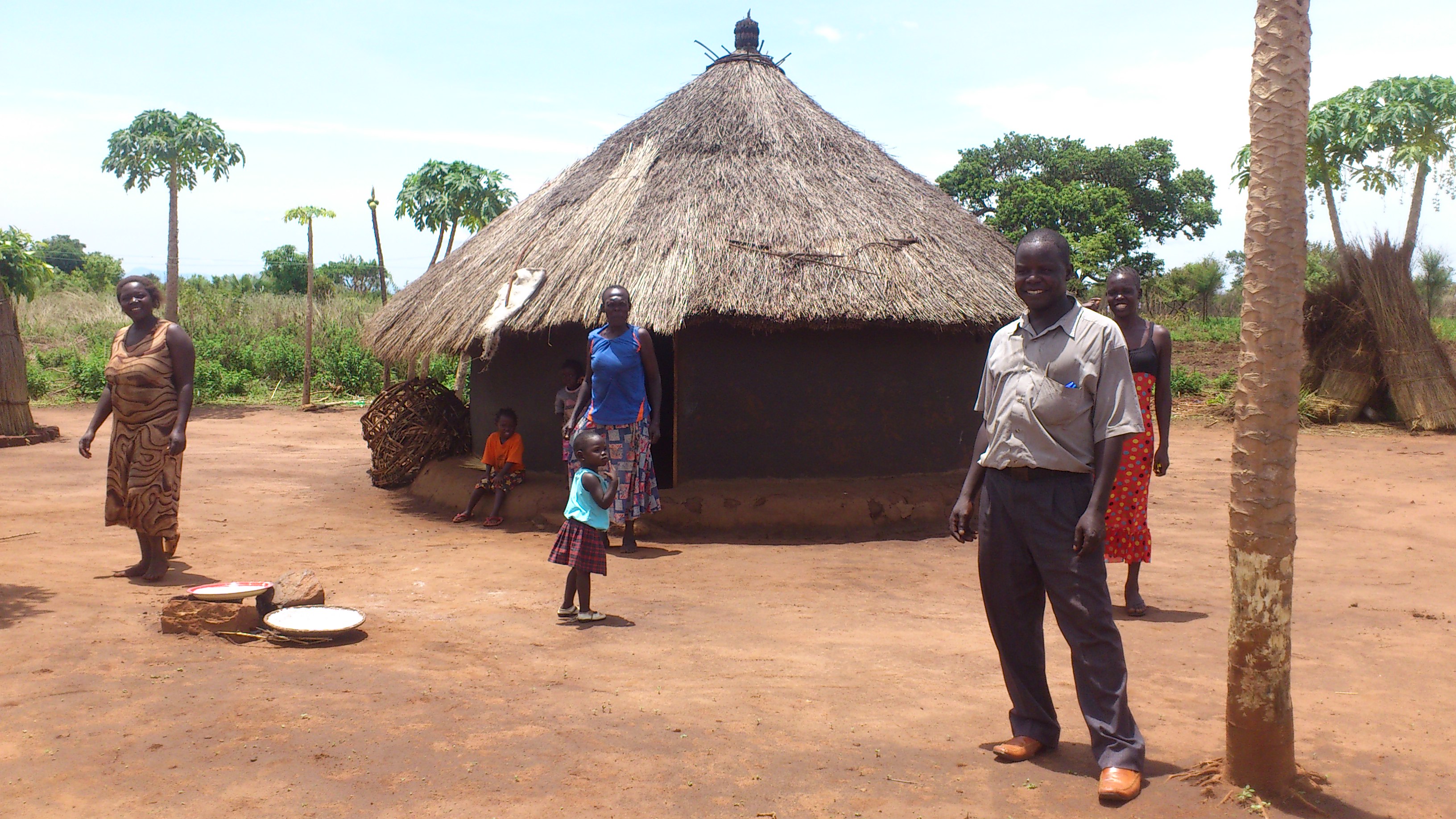
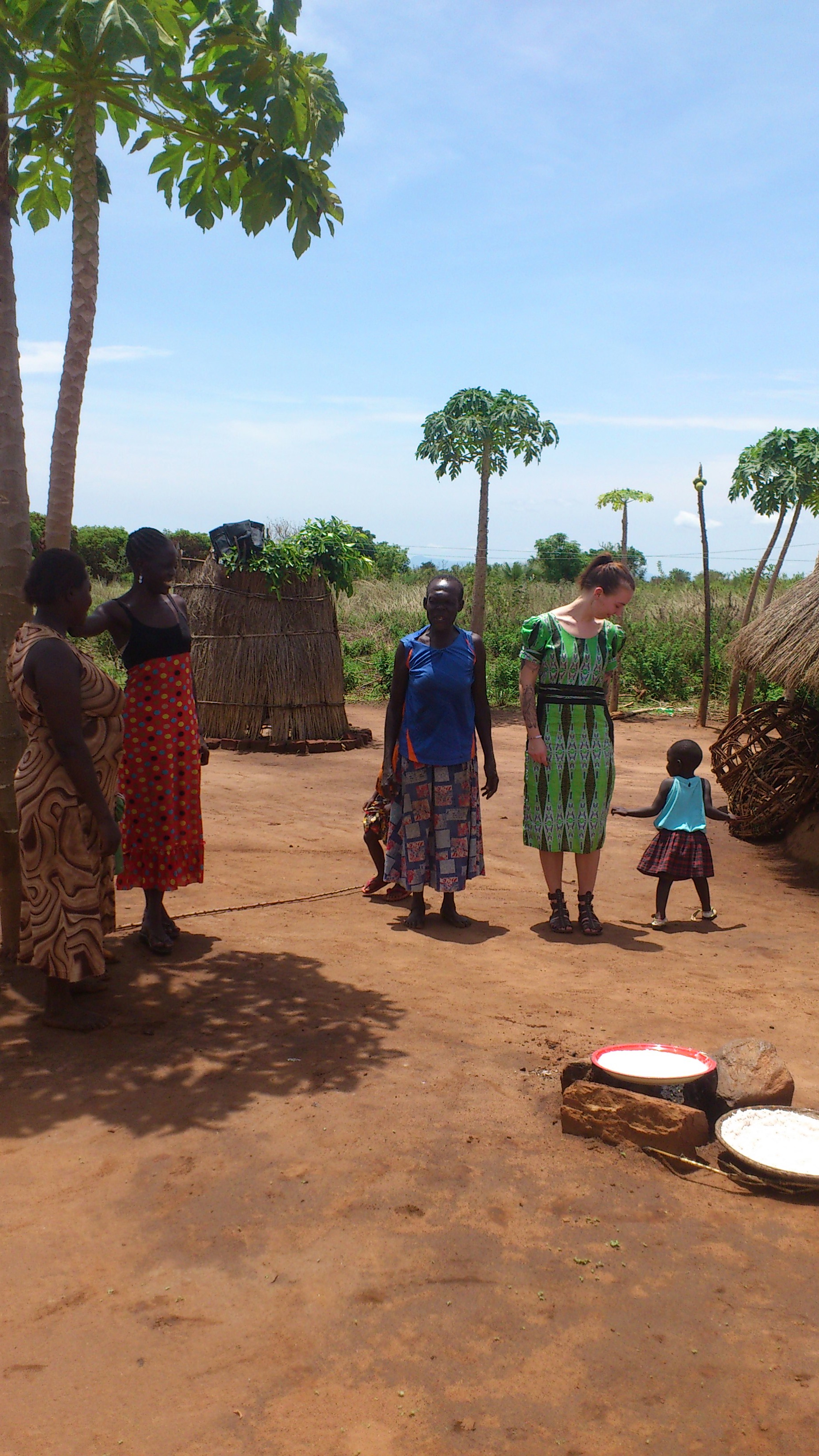
These first days in Dar have been great fun, but also very intense. Tanzania is extraordinary, and very different from Sweden. The weather here is hot, sunny, and humid. The rain can come all of a sudden, and can be very strong. The people look different, and they’re all wearing beautiful and colorful clothes.  The roads are crowded with people, cars, Dala dala’s (busses), bajajis, and motorcycles – and people drive like crazy! Here, you better look twice before you cross the street (and you better be fast)! For the good and the bad, Dar is definitely vibrating!

Overall, Dar es Salaam isn’t what I expected it to be – it’s much better! I’ve already met new people, got several new rafiki (friends), and seen different parts of this huge city. I arrived a bit more than a week ago, but I already feel like I have found another place to call home. Tanzania is beautiful, and I’m certain that this stay will be a mind-blowing experience!

Preparing the food

In addition, last weekend, another MFS-student and I got invited to an Easter celebration with our new Tanzanian friend. We got picked up at our hostel, and drove to her family’s place in a village outside of Dar. In the village, we had a delicious traditional Easter dinner. Our friend’s family was lovely, and they treated us as part of their family. It was interesting to see how Easter is celebrated in a middle-class family here in Tanzania, and we really enjoyed the company and the barbeque.

Now I have to continue with my studies – time travels very fast!

Take care! Kwe heri. 🙂

Såren efter en långdragen konflikt

Hej allesammans,

snart har det gått en vecka sedan jag ankom till Uganda. So far, so good. Jag är bosatt i norra Ugandas ”huvudstad” Gulu. Min kandidatuppsats kommer att handla om forna barnsoldater som är delaktiga i rehabilitering genom en icke-statlig organisation som heter Community Network for Social Justice. Denna NGO är väldigt liten och verkar i mindre samhällen där det finns barnsoldater. Idag är flertalet utav de forna barnsoldaterna tonåringar eller unga vuxna. Att tala om psykiska besvär i Uganda är väldigt stigmatiserande. Vad denna NGO gör att dessa personer får dela med av sina erfarenheter genom gruppsamtal eller privata samtal.

Idag var det min första dag ute i fält. Jag var i staden Atiak, Amuru distriktet. Landsgränsen till Syd-sudan är relativt nära. Vad denna stad är ”känd” för är Lord’s Resistance Army’s  (LRA) massaker 20-onde april 1995. Ungefär 300 människor dog. Totalt så har Atiak och resterande norra Uganda levt i konflikt (hög och låg-aktuell) i 20 års tid. Vad jag gjorde i Atiak var att träffa och presentera mig för flertalet lokala ledare i staden. De alla välkomnade mig och sade att de skulle hjälpa mig så gott de kunde. Sedan bestod min dag av observationer i Atiak. Jag tyckte att det var lugnt och rofyllt i staden. Men till och från slog tanken mig när personer passerade förbi mig med trasiga, smutsiga och illaluktande kläder – att detta är en stad som har lidit och lider av en avslutad konflikt. Flyktinglägerna är borta och människorna är åter till sin primära bostad. Människorna är fattiga och flertalet bor i lerhyddor med halmtak.

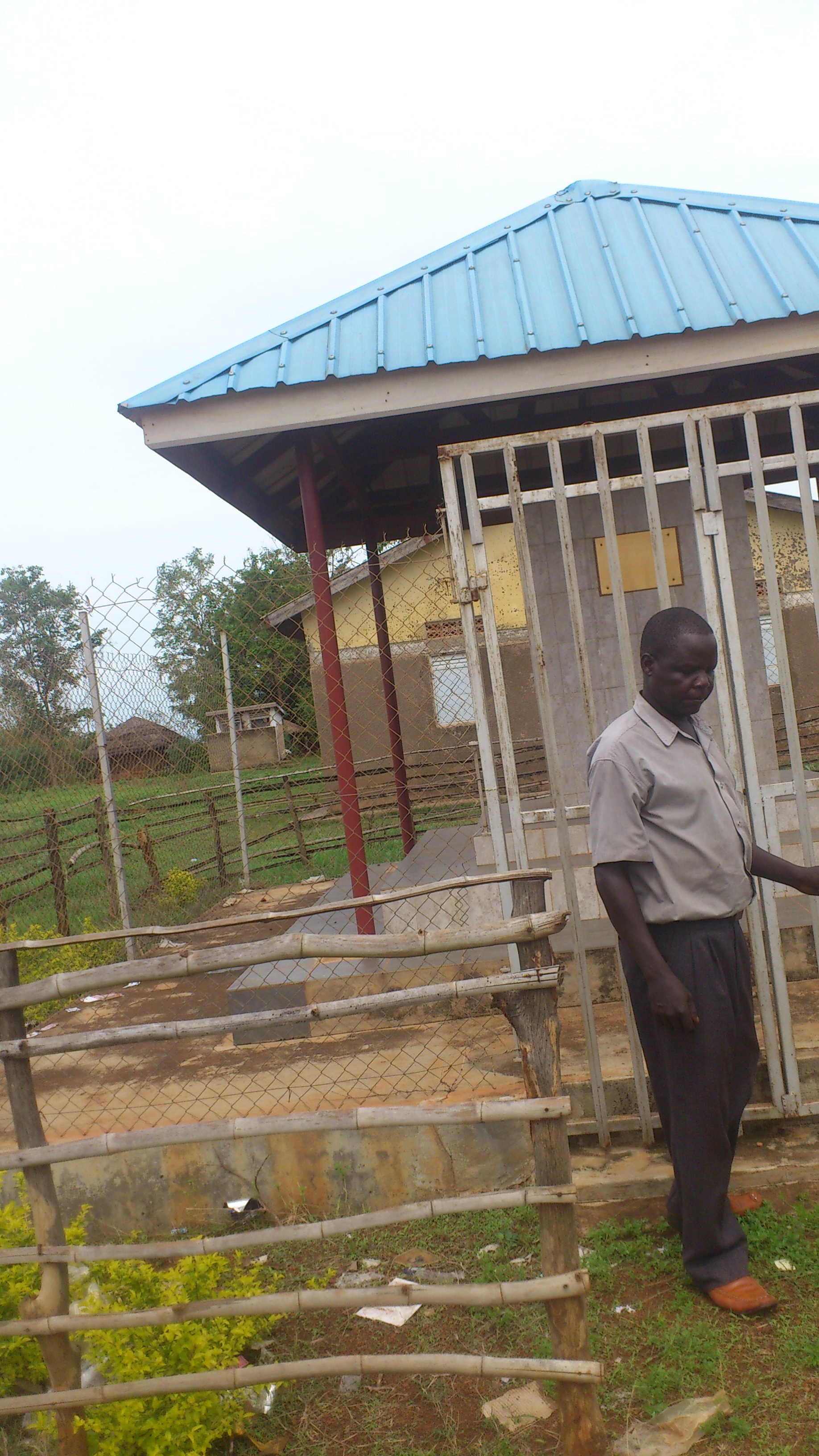
En man fångade mitt intresse när jag skulle besöka Atiaks Lwani Memorial College. Han låg och grävde under ett träd som såg ut som en bikupa (svårt att förklara). Han var smutsig och såg härjad ut. Min key informant, och fältmedhjälpare Chris stannade och pratade med honom på Acholi (språket som talas här). De alla skrattade och sedan körde Chris vidare. Jag frågade då Chris vad han höll på med och till svar fick jag ”He’s digging for a rabbit”, ”a rabbit?” sade jag och såg fundersam ut. Då fick jag förklaringen av Chris brorson att denne man var psykiskt skadad efter LRA och att han har inte varit sig själv sen dess. Såren från en konflikt finns fortfarande kvar i Atiak.

Chris utanför sitt barndomshem i Atiak
"Apan i buren" försöker smälta in med afrikansk klänning
”Apan i buren” försöker smälta in med afrikansk klänning
Minnesmonumentet för massakern 1995 i Atiak

Jul i Indien

Hej! Det har varit ont om el och internet de senaste veckorna men efter mycket jobb och mindre fritid har jag äntligen unnat mig lite ledigt och har hamnat i Goa. Även om inte många firar jul i Udaipur där jag bor i vanliga fall så är det väldigt svårt att få något gjort under jul, de flesta har ledigt eller åker bort och då blir det svårt att få något jobb gjort. Men de senaste veckorna har varit produktiva och jag har börjat få in min data i SPSS. Skönt med ledigt nu i alla fall!

Goa är fantastiskt, underbart med sol och bad. Dessutom var det väldigt lugnt och skönt på julafton vilket passar mig utmärkt eftersom jag generellt inte gillar att fira jul. Tror att jag har hört totalt tre julsånger och inte sett röken av julmat. Tre andra tjejer från organisationen har också kommit hit så vi är ett gäng som umgås. Goa är underligt på så vis att det är Indien fast det samtidigt absolut inte är Indien. Här finns till exempel sallad (!) och de serverar biff, vilket känns jätteunderligt. Dessutom hör man svenska överallt och det var längesen!

Jodhpur

Jodhpur var fantastiskt! Och imorgon eftermiddag verkar det som att jag faktiskt ska få komma iväg till produktionscentret i Badgaon tillsammans med Sadhnas inköpsansvarige. Det ska bli spännande.

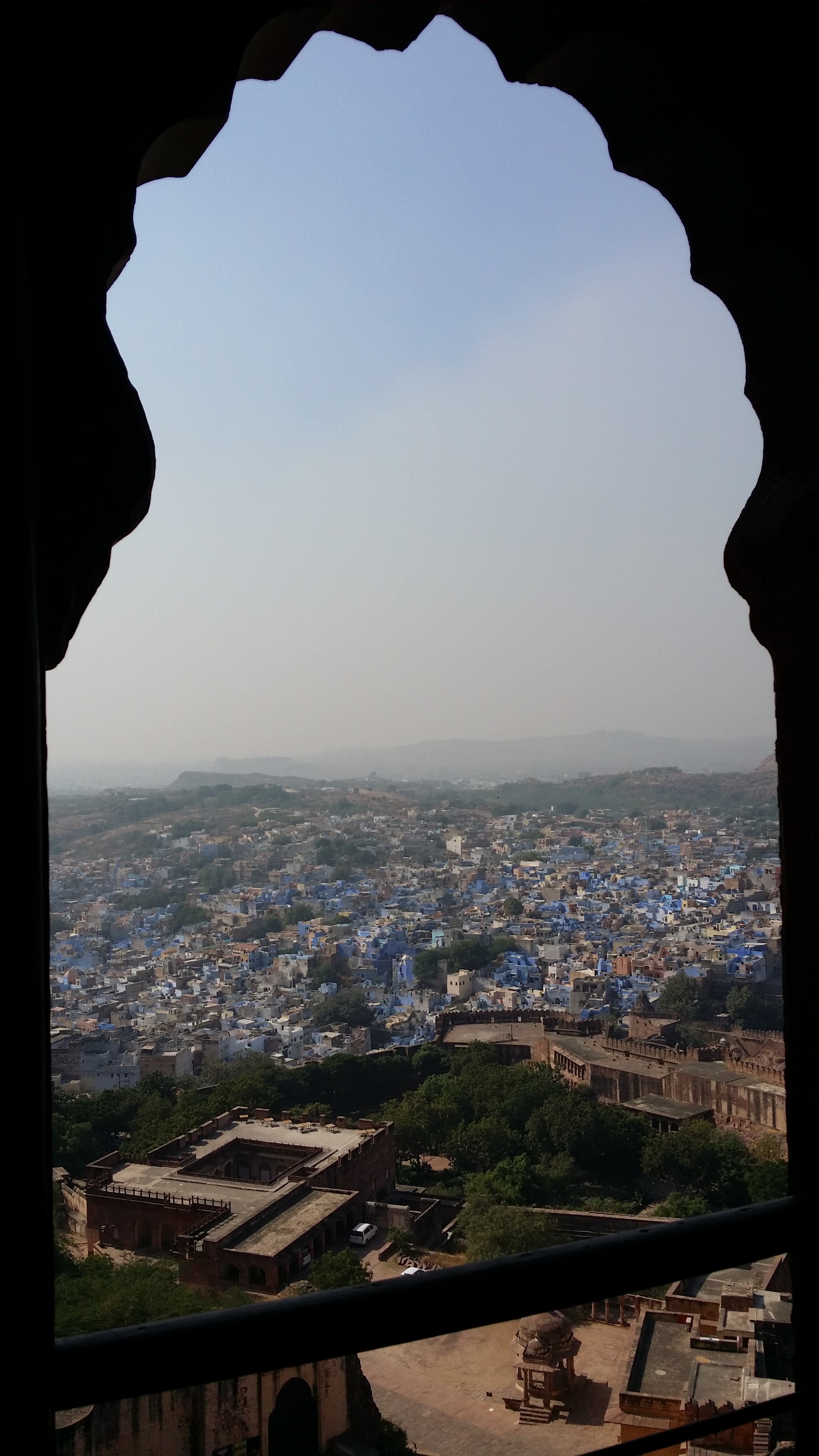
I Jodhpur turistade jag tillsammans med en annan svensk tjej, Therése, och tre underbara norskar, Rune, Maria och Lydia. Vi blev ett litet team Scandinavia. Det bästa med resan var nog det fantastiska enorma fortet uppe på ett berg ovanför staden där utsikten verkligen gav en förklaring till varför Jodhpur kallas den blå staden. Vi blev också inbjudna på födelsedagsfest av en jättetrevlig indisk kille vid namn Praveen. Vi fick följa med ut till hans kompis resort ute i öknen och bo i lyxiga tält och lyssna på traditionell musik och njuta av dansuppträdanden med bara en brasa som ljuskälla. Fantastiskt var det! Mindre fantastiskt var färden i så kallad ”sleeper bus”. Trots namnet blir det inte mycket sömn i en sådan buss på sådana vägar. I början var det väldigt kul, lite som en berg-och dalbana, men när klockan börjar närma sig 4 på morgonen och man mest fått whiplash och ingen sömn så är det inte jättekul…

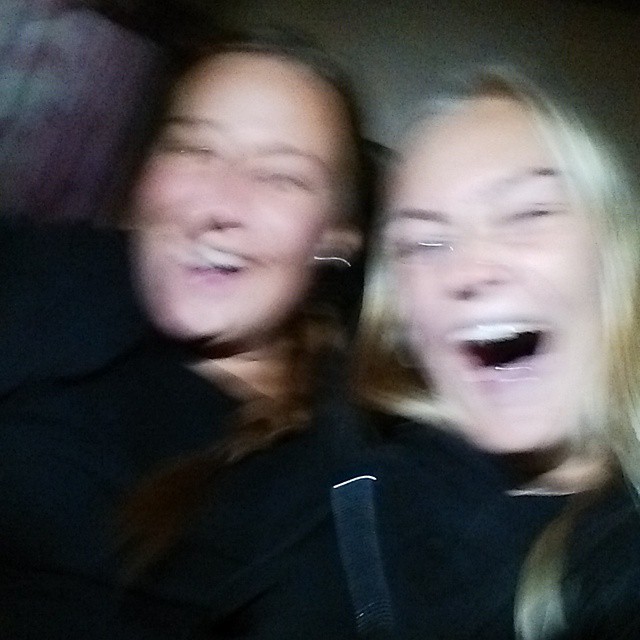
På en översta bilden åker jag och Therése ”sleeper bus”, på den nedersta ser man en del av utsikten från Meranghar fort i Jodhpur.
sleeper bus


20141130_124735

Ovanlig vecka

Den här veckan har varit ovanlig för att det inte hänt så mycket, och det är ovanligt för att vara Indien. Veckan har varit mindre produktiv än de andra, har kunnat åka ut i fält för mitt projekt inom praktiken men min kontaktperson för min studie inom MFS har ställt in alla våra planerade besök fram tills mitten på nästa vecka. Därför har jag bestämt mig för att åka till Jodhpur över helgen och ge mig själv lite semester och komma bort från stressen av att inget händer när man vill att det ska. Jag åker tillsammans med några av de andra praktikanterna så jag hoppas att det blir en kul helg.

I övrigt skulle jag säga att det mesta flyter på, jag har fått in ganska många svar på min enkät och intervjuerna har varit mycket givande. Är nog mest oroad för hur jag ska få in all samlad data i min uppsats och få det supertydligt inom mitt ämne. Men det får bli ett bekymmer sen i vår när jag är hemma igen och ska skriva. Just nu samlar jag bara så mycket material jag kan och hoppas att det blir rätt och bra.

Eftersom det inte hänt så mycket spännande har jag inte så många roliga bilder heller, men jag bjuder på en bild på en man med kamel.

20141125_131432[1]