Day 5

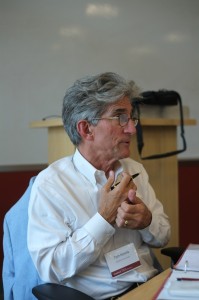
After working in our group, we met with Trevor Loy. He is an adjunct professor and coach in the STVP program. Our main question for Trevor was how to persuade stakeholders to be more active entrepreneurs or to support entrepreneurial projects. Interestingly enough he is of the opinion that STVP evolved through an entrepreneurial approach itself. Meaning, have an idea like lectures with entrepreneurs, plan it, do it, check it, act upon it and don’t be afraid to kill it in case it is not working. In his opinion, STVP provides the space and opportunities to attract people. An entrepreneurial culture has to evolve by itself and can not be forced on people.

Through his coaching we got many small ideas how to foster an entrepreneurial culture. Anyhow, it seems this approach is a bit in contrast to the classical way organisational projects are done. Maybe the solution is an agile approach like SCRUM with a list of ideas as backlog. Then, take one idea at a time. Anyhow, it seems that the development cycles in organisational projects will be quite long.

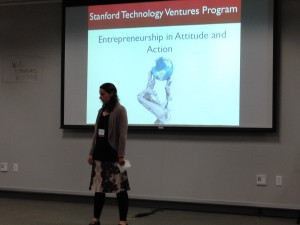
Notes from the ”Kinaesthetic Design Thinking Workshop” run by Anne  Fletcher and Aleta Hayes from the d.school. Todays workshop activity was  jointly led by Anne and Aleta that forced all the STVP fellows and staff to actively explore motion, dance, and the physical body as a means to explore human centred design. Through getting all of us to choreograph our signatures with our bodies, arms, legs, belly buttons, head, neck and hips we dived deep into exploring physicality as a means of understanding the needs of users, a key part of design. At the same time we talked about history of d*school and how they organically grew up from a desk into a hallway to a core part of the Stanford (http://dschool.stanford.edu/).

dance2 dance1

Following the basic philosophy, Design Innovation of the d.school that operates out the convergence of business, technology, and human values we learnt how to reframe our own challenges for the STVP program. What made this workshop so interesting was the combination of moving, thinking and discussing design from the body to the mind focused on exploring how to think differently about our projects in STVP. For the MAH team this was familiar ground since we have a strong and related design philosophy at K3 and the university and it was good to experience how the d.school’s enacts their design innovation in practice, theory, and across the campus.

Off for the weekend…
Day 4 – Field trip

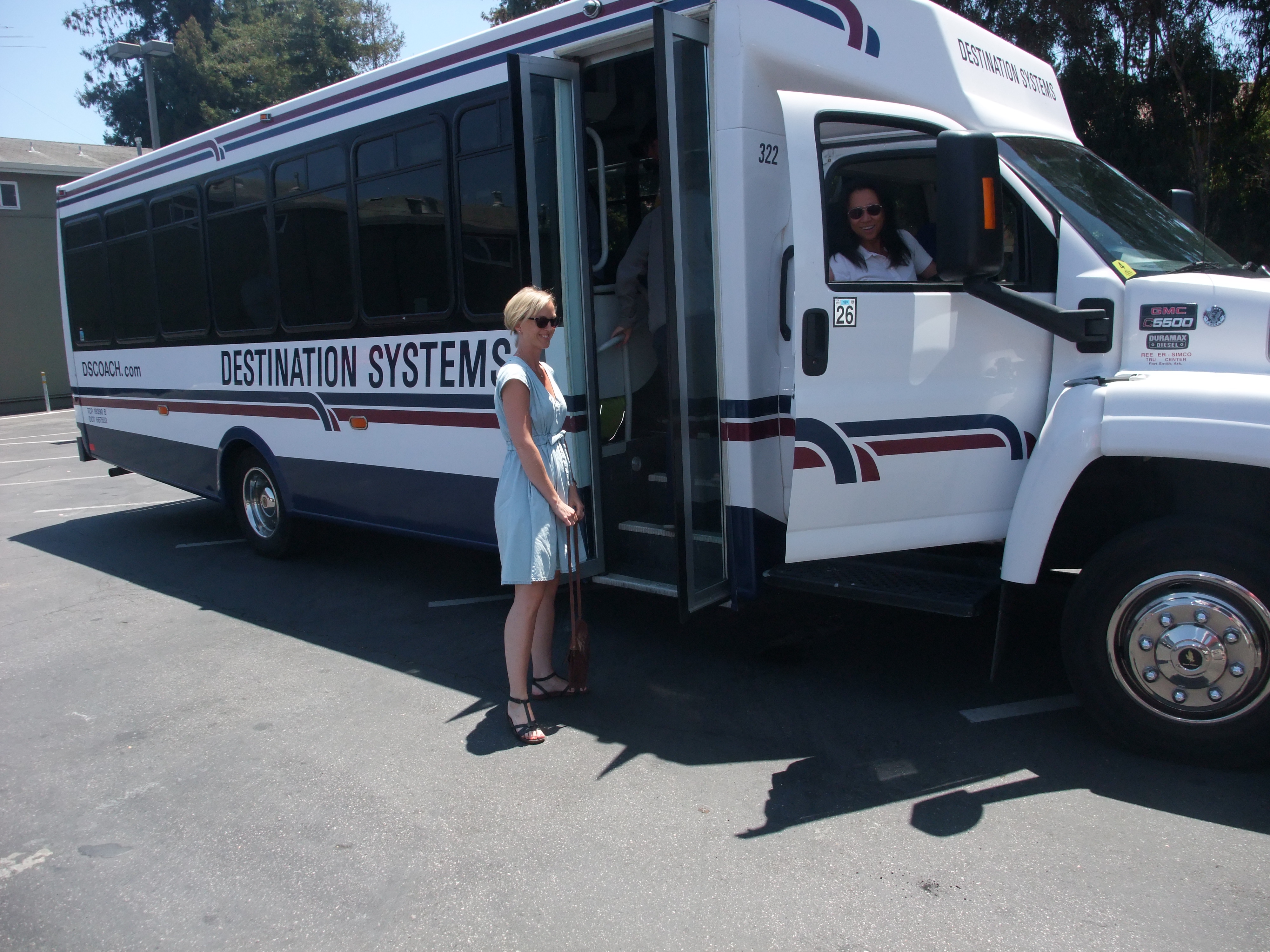
The day started of at Stanford Campus a bit earlier than other days. We jumped on the tour bus with our Faculty Fellowship.

DSCF7824

Our first stop where at the Innovation node called Rainforest. It is the outreach function of T2 Venture Creation. They use the metaphor of rainforest to visualize innovation culture and framwork as the chaos of weed growth, rainforest vs. plantation i.e. established industry.

rainforest P1020555

They mainly deal with state and government officials who need to get a better understanding of innovative climate and (the importance of lacking of)structural support to enhance disruptive idea generating mindsets, venture capital formation, entrepreneurship development, support programs, and innovation policy.

canvas

T2 Venture Creation is (in their opinion) the world leader in the design and implementation of innovation ecosystems that are regionally relevant, culturally sensitive, and highly sustainable. They levarage networks, grow startup companies, manage capital, and build innovation ecosystems around the world. They invest capital and time in technology startups with the greatest promise and help them succeed. Their global network comes from our unique expertise at the intersection of private venture and public policy.

We got a introduced to a reshaped version of Osterwalders Business model canvas called the Rainforest canvas.

2014-07-18 10.14.02

The visit was very interesting and we couldn’t quite get ourselves to scurry back in to the bus in time. A bit delayed we got to our second visit: StartX. StartX is a non-profit organization whose mission is to accelerate the development of Stanford’s top entrepreneurs in all fields through experiential education. It reminds of an incubator/accelerator but with the twist of not taking any equity, being completely free and the fact that all admitted entrepreneurs have access to a number of different highly experienced mentors in a range of professions. The visit was super interesting and we got inspired to implement a similar thing in Malmö.

startx2 2014-07-17 11.25.27

After StartX we where a bit behind schedule and decided to take early lunch in Palo Alto instead of San Fransisco and went to lunch at the Fisherman’s Wharf.

The trip up to San Fransisco went along the beautiful 280 and the landscape is truly amazing with the lenticular clouds along the mountain ridge to the west. The traffic was not on our favour and we got to our third visit, After College, about 20 minutes late.

AfterCollege is the largest career network for college students and recent graduates. They are working to eliminate unemployment among college students and recent grads by helping students explore jobs and internships based on answers to 3 easy questions: what did you study, where, and when do you graduate. See more.

aftercollege aftercollege2

It’s an alternative to Future Finder that we have at Mah and Jeanette got as excited at this place as I (Joa) got at StartX. Due to the fact that we where a little late we sadly had to abort the finalizing round of Q&A in order to get to our final visit – NovoEd.

novoed

NovoEd is a social online learning environment. NovoEd partners with education institutions and corporations to offer a platform for collaborative, experiential online courses, with emphasise on collaborative. Some courses have over 100.000 participants from all over the world.

2014-07-17 14.48.49

To sum it up, the day was amazing. All impressions from the visits as well as the reviews and discussions in the bus with other teams lefts us pretty beat when we finally arrived at the house in Mountain View late at night.

Day 3: Campus Tour

Today Jeanette and Sven met Nick who showed us around campus. He is studying political sciences, is working in the Visitor’s service and in a micro financing company. He plays beach volleyball and ice hockey. Apparently, sports activities are an important part of life on campus.

Nick

In fact the original name is Leland Stanford Junior University. It’s named after the son of the founders who passed away at the age of 15. Not being able to longer take care about their own child they decided ”the children of California” to be their children.” This resulted in the foundation of this university.

Stanford equals the size of 76 Disney Lands. It has the same amount of female and male students. 37000 applications come in every year. From these 2200 are selected and 1700 go on as fresh men. Interestingly, prospect students do not apply for a certain program. They apply for the university and can choose a programme after they spent some time on campus.

The Hoover tower hosts a library as well as an archive of the Russians when they were collecting information about different people during the cold war.

hoover4

Bill Gates funded the computer science building. Here, also Google was invented. It’s first url was under the umbrella of stanford.edu I other buildings around companies like Yahoo had their starting point.

gates

Joa and Daniel participated this morning in Stanford’s Pre-Collegiate Summer program for Gear Up—Bring Business Opportunities to Life. Stanford’s

Pre-Collegiate Studies launches Summer College Academy, is an innovative learning experience for high school students that begins online and
culminates in a three-week residency on the Stanford campus.

They had the pleasure of giving feedback on 11 business concepts pitched by high school students that ranged from new high-tech bandages for sports to new tools for managing your learning across diverse e-learning tools.
The session was extremely inspiring to see young people solving real-world problems in innovative ways through an entrepreneurial approach. The course is being led by Lena Ramfeldt who has also taught at DV as a guest professor. More information about the summer school below: http://spcs.stanford.edu/news/summer-college-academy/050614

Lena_Daniel

Now, off to a Mingle.

Day 2

Day 2
In the morning and pre noon our team had some time to work on our own. We started discussing where we are at and our different expectations of the project and how the STVP Faculty fellows program can propel us in the direction we want. Different ideas of project overviews and both expected and sought outcomes where debated.

2014-07-15 09.21.29

The day with STVP were to consist of the first meeting with one of the coaches, Tom Koznik. We prepared this meeting by dissecting the competences of the different coaches in the program to optimize our time and outcome with each one of them.

bild 2

In the meeting with Tom we wanted his input on inspiring students and faculty in order to flip their mindset on how our project can add value throughout the university.

DSCF7117

We also wanted to hear a bit more about student involvement over time and the Mayfield program that we got introduced to yesterday. By chance we got to meet Yael Stegla, an alumni from the program. Furthermore we wanted Toms view on how to leverage on local engagement in education. Him beeing a marketing person the meeting mostly evolved around attracting general engagement (academic, management, Society and business) and student engagement in particular.

Day 1

The first day of The Stanford Technology Venture Program Faculty Fellows is behind us. Other teams come from Aalto(Finland), UDD(Chile),KIT(Lithuania), Warwick(England) and three universities in Uruguay. The day mostly consisted of presentations and descriptions of our challenges and thoughts for the two weeks to come. It was interesting and inspiring to hear how the challenges of the other teams ranged from creating an infrasructure in the gap of academia and business where the government for a long time has opposed this. To others who already has an established knowledge transfer organisation with the need to create an entrepreneurial culture among the faculty staff in order for the entrepreneurial mindset to transpire into the minds of the students through weaving entrepreneurship into the curriculum into all programs and courses.

2014-07-14 09.19.16

Stanford staff and coaches did their best to inspire and propel us all in the right direction (in their opinion). Although some of the advice was a bit over the top, like on prime minister level, and others were compilations of 20 years of national development comprised into a single sentence followed by – ”do this and You’ll be fine” the overall impression from the first day was that this will be worth our while.

2014-07-14 09.34.04