The first days in Hiroshima!

Phew!

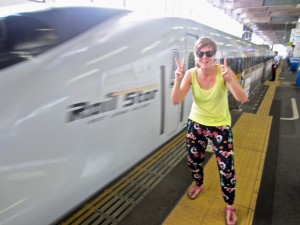
Welcome everybody! After an action packed week in Tokyo with my fellow student Sofia Wachtmeister, we took the Shinkansen (the fastest train in the world!) to Saijo, Hiroshima. And there is certainly no rest for the wicked!

IMG_7753

So far the Master’s Summer School on Global Citizenship and Peace has introduced us to a wonderful group of people, all of different national origin and with different stories of life. Except for us Swedes, the other students are from Indonesia, South Korea, Italy, Spain, USA, Vietnam, Denmark, Australia and China.

IMG_7777

We have engaged in interesting discussions on global citizenship, tried the local cuisine (Okonomiyaki, delicious!) and started to conspire against each other for the UN role-play on Saturday.

DSCN2897

We have all prepared a paper for this week, covering one of four themes on global citizenship and peace. These are to be presented and critiqued by other members of the group. As one of the first discussant and presenter, I found that it was an enlightening experience to have such a mixed group with different background to give me feedback. At this course, we have come in contact with differing teaching styles and study techniques – due to the different backgrounds of both teachers and participants – but what we’ve realized is that despite cultural and academic differences, many of us a working towards the same goal: bettering our understanding of the world and our role in it.

At the welcoming party that was held this night, we also got a chance to mingle with participants of other groups. As these couple of days have passed, we are starting to realize that the coming week will be as intense as it will be fun!

Stay tuned for Sofia’s account of crazy Tokyo and the upcoming activities of Hiroshima!

DSCN2888

En Route

4/8, 13:30 PM

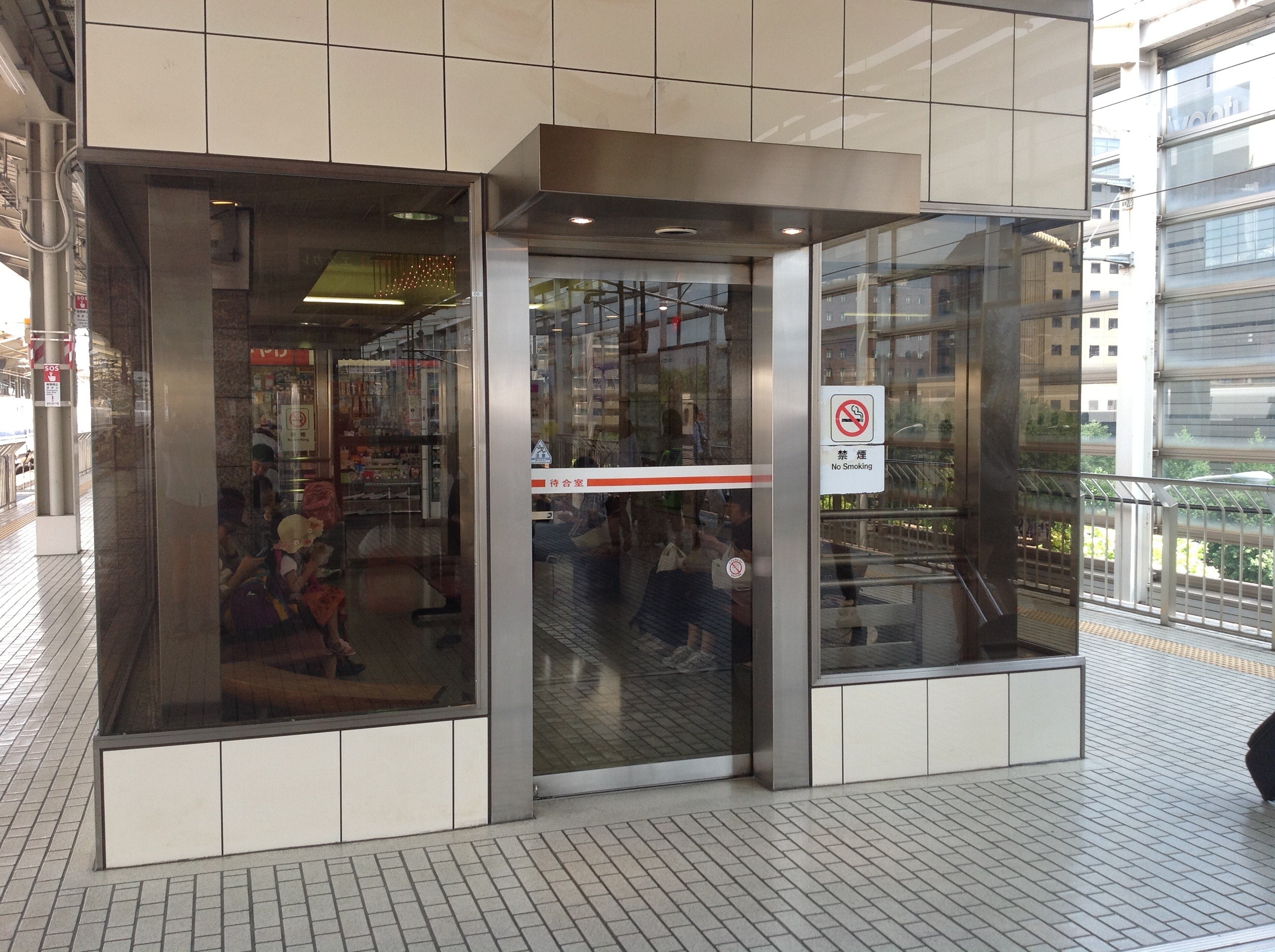
I am so glad that I have discovered the chilled waiting cubicles available on most train platforms (they are obvious once you are aware of them, but poor signage lead to most tourists suffering outside). Being cool increases the convenience of waiting for trains by a mile. Kyoto, which I have just left for Hiroshima and the INU Student Seminar commencing today, is notably hotter than Tokyo. Another way of avoiding the heat is to spend time in shops equipped with air-conditioner, something I have dedicated most of my time to do whilst in Kyoto. Despite spending countless of hours exploring almost every traditional Kyoto craft shop I must admit being a tad disappointed by the offering. If its truly traditional it’s ridiculously expensive, otherwise it’s mostly cheap kitsch. Before finding this out I bought a load of bubble wrap in the Japanese equivalent of a £1 shop (JPY 100 shop), believing I was going to wrap tons of Japanese ceramics. So potteryless I am now dragging around two huge rolls of bubble wrap. Luckily they are super light and they serve a good excuse for purchasing and wrapping loads of Japanese beer and Hiroshima made sake to bring back to the UK. With neither a decent Yukata in sight, despite looking around in second hand shops, not a classic Kyoto knife (the only REAL old knife producer, unlike many other, was closed) I have left Kyoto with barely more than a few pairs of silk socks and a mini Totoro figure (an essential buy if you love the film).

Since the temple shut their door at 9 PM, in order for the guests to wake up refreshed at 5 AM and participate in the morning ceremony, there have been no social activities late at night during my stay. Instead I have enjoyed watching the monks going about their business in the temple village and the older, more religious, demographic of Japan, who prays outside the temples in the morning. This demographic is also extremely well mannered and gives everyone they meet, without exception, a good morning greeting followed by a short bow. Therefor peaceful morning walks in the temple village was pretty intensive since you have to stop every 5 seconds in order to greet. At 7 AM a vegetarian breakfast was served in the dining hall, in accordance with Buddhist teaching of not killing any living creatures. Scattered outside the temple area is many vegetarian (and a vegan Michelin starred restaurant!) to my delight. On the note of vegetarian food, the pillow I slept on during my stay in the temple was filled with rice and must have been the most uncomfortable piece of bedding ever made. I rather sleep on my bare arms than on a bag of rice, which felt like a lump of concrete after a while.

Whilst in Kyoto I had many new culinary experiences. The vendors at the Nishiki food market happily gives away their samples and after passing through what felt like hundreds of stalls I was completely stuffed. As a green tea lover I am thrilled by all green tea filled stuff and the only food item I dislike so far is the Daifuku, filled with Azuki bean paste. I suppose you get used to them as treats if you grow up eating them, but I cannot understand the Japanese joy over Azuki bean paste. However, I have enjoyed plenty of raw egg in Kyoto. Raw egg and noodles, raw egg for breakfast and raw egg, which to be fair you later cooked yourself on a mini gas stove at your table, with rice. Will do further research if this is a typical Kyoto thing.
A final note, I really appreciate the Japanese traditional Ofuro baths I have been fortunate of having every single night before going to bed. The picture below is from my Tokyo bath but I have enjoyed a similar styled one in Kyoto as well.

Sayonara!

/ Hedvig

1.Platform cubicle, 2. Temple stay, 3. Raw egg, 4. More raw egg, 5. Bath

CubicleTemple

Raw Egg

Another Raw Egg

Bath

Konichiwa

11:33 AM

Greetings from Japan,

After 3 days in Tokyo I am now on the Shinkansen train towards Kyoto and I am utterly impressed with the Japanese transportation system. The trains are remarkably clean and nearly always on time (if not, you will receive the information, including an explanation behind the delay, on the live feed available on all public transport vessels), but the best must be the music played when arriving at certain stations. The tune varies depending on the stop but its generally an upbeat bitpop jingle, which always makes me smile. The purpose of these tunes is to ensure that daydreaming travellers, or sleeping commuters, wake up and don’t miss their stop.

Despite knowing about the Japanese appreciation for neat and tidiness prior to my trip, I am thoroughly amazed by the overall cleanliness. The safety of Japan stretch from the overall low crime rate to the extreme safety measures taken when public works are carried out. They usually employ a person, whom’s sole purpose is to guard the publics’ safety. The other day I was walking across the wonderful park located to my place of stay and despite walking several meters away from the park workers, who was trimming the lawn, surrounded by warning signage and blocked off by cones, I was asked by a uniformed man to kindly walk even further away from the works, in case I was going to be hit by grass. Every roadwork usually have such a guard, who simply watches the whole in case someone would remove the blockade and step into the whole. Health and safety measures to the top!

During my stay in Tokyo I have been fortunate to know people who live here, whom have guided me around town and provided answers to all my silly questions, like why people are wearing face masks (which is not, despite what one might think, to protect themselves from polluted air or bacterias, but to protect others from the bacterias oneself carries). My friends work colleague was wearing one the other day, due to a light cold, and he explained that it would be awfully embarrassing if he was to cough in the office. Good manner is also to clean your hands everywhere you go. Disinfection agent, or sanitary towels, is provided at mosts counters, such as at the post office, shop and restaurants. One does not generally eat or drink in public, again in order to show consideration for others, whom might not want to watch you eat. I made the faux pas by eating my Onigiri in public, when I should have gone to a hidden spot or a park. This could be one of the reason behind the absence of public litter. Another reason is the general prohibition to smoke outside, which the odd naughty smoker ignores. This results in no butts on the ground! Same goes for take away cups. Despite serval Starbucks I have yet not seen a single person drinking coffee from a take away cup. This also stems from the tradition of setting time aside for food and drink, it is not meant to be consumed in a rush.

However, the absence of smokers outside does not stop them from smoking inside, in connection with a meal. Whilst dining in the Ebisu area I found most people, and kitchen staff, smoking. It appears that behind the cleanness frenzy facade lies little filthy secrets. Japan is not particularly Eco friendly with little green energy and recycling.

Another backside is of the great organisational machinery, that represents the Japanese society to well. According to some non-Japanese friends it can be very frustrating for foreigners to work in Japanese companies at time. When suggesting new ideas, they are consider to have an attitude problem according to their superior managers, since it is not their place to voice opinions. As a ordinary worker, in contrast with managers higher up in the hierarchy, one is to follow all rules to precision at all times, regardless of whether the rules are efficient or not (many are not since great value is placed on the tradition of how things is to be done, which can be most ineffective at times) and without questioning. This of course results in some very good things as well, like the impeccable service one receives, or the genuine quality of production and food. To carry out ones work with the highest precision and accuracy appears to be equally important at all levels of employment. Nothing is done on a whim.

The consideration taken of others benefits me as a visitor greatly. Everyone is astoundingly polite and possess great manners. In the company of Japanese I feel terribly clumsy and rude. I have yet to learn the difference between the numerous levels of politeness when greeting, depending on to whom you speak to. The only skill I master is Japanese table manners. Despite the difficulty eating a whole fish with chop sticks I managed to wipe all the meat of the bones, for which I received paise from a Japanese friend.

If ever visiting Tokyo, make sure you stay or visit it’s old town, Yanaka, which survived both the great fire of Tokyo in the 30s and the WWII. The neighbourhood is very quaint, with a strong community feel. Before I left my traditional Ryokan, I signed the owners petition for preserving an old local tree, currently in threat of being torn down. The locals also worry a great deal about the widespread housing development in Tokyo, where the tall buildings leaves the elderly stranded on the top floors, unable to go out and about.

In a few short hours I shall join the monks and experience some zen through the daily meditation practises. At the temple I shall abide strict rules for sleeping hours, eating habits and silence. Per request my friend telephoned and organised my stay, and since there is no English spoken or website providing any information, I am somewhat nervous about not following the procedures correctly and offending the monks by doing something wrong (like sticking your chopsticks in the rice bowl is only done at funerals). However, regardless if I do or don’t they probably won’t tell me off since it would be impolite to do so. Despite Tokyo being surprisingly still, at least in comparison to hectic London where people elbow their way forward on the tube and police sirens constantly roaring, I long for the calm of the Myoshinji temple village of Kyoto.

/ Hedvig

1. Tatami, 2. Tsukiji, 3. Yanaka Cemetary, 4. Okonomiyaki

Tatami

Scallops

Yanaka

image

Technology @UniMelbourne!

Dear readers,

Going on exchange studies will provide you a wide range of diverse experiences, positive as a bit more negative. Being in Melbourne since the beginning of February, I´ve learned how the University has been approaching technology in a very different way than Malmö University.

On the welcome reception to all overseas students, we were taught, right from the beginning, that we should immediately download some useful apps that graduates at the Computing Department has been modelling. Here come some examples of them:

1) Lost? No worries! 

Campuses in Australia are generally wider and more outspread in the city. It´s really easy to get lost, and I´ve experienced it myself quite often. However, an “app” has been developed in order to help students navigate through the many alleys and roads at the Campus. “Lost on Campus” has the answer for everything!lost-on-campus-pandamap will indicate your directions and the approximate time you´ll be needed to reach your destination. Thanks to the GPS, it will walk with you too! But it´s not all!

Through it you can even trade our old books, look for internships and events happening at the University and leave a “comment” that the University services will directly receive and answer. So if you´re planning on an exchange in Australia (the application works for the major campuses in Australia), “Lost on Campus” is the solution to most of your worries.

2) Towards a safer university? Unisafe!

747-1-unisafeThe University’s Safer Community Program in Melbourne launched its Unisafe app in an effort to educate staff, students and visitors to the University on ways they can enhance their personal safety and contribute to building a safe and secure environment.
Students, staff and visitors can use the app to request a security escort to or from campus, and can also access information about campus security services, health services such as counselling, disability liaison and international student support.

The app also includes tips on enhancing personal safety on campus, public transport, in cars, at home and ‘out and about’… Wonderful!


3) Wanting to know what´s happening at UniMelb? Download the app!

iphone-wordStudying at UniMelb? The UniMelb app provides access to the latest information about the University of Melbourne wherever you are!

The UniMelb app includes:

– Photo gallery: Explore the campus in pictures

– Contact Directory: Search for University of Melbourne staff and connect quickly by phone or email(some staff don’t make their details public)

– News: View the latest news from the University of Melbourne newsroom

– Search: Quickly access the University Web Search

An inspiration for Malmö University?

First weeks in Melbourne!

Here some weeks of rest in Malmö, here I am, on the road again! I will spend the next term as an exchange student at the University of Melbourne, Australia!

I arrived in Australia around the 19th of February, and the first weeks in Australia have been a bit hectic since then.

First priority of all: accommodation. For all future students at Melbourne University, no panic!. Melbourne is a quite relaxed city regarding accommodation and there are plenty of rooms available. The most common form of accommodation is “shared apartment” or “shared houses”: apartments for only one student are very rare and out of price.

A useful website for all of those who are planning to spend a term in Melbourne: http://www.gumtree.com.au/. There you´d be able to find both rooms and jobs. I´ll talk about the job part a little bit after. An acceptable price for a room in Melbourne is about 250-300 dollars/week (around 1600-1900 SEK), which is quite of a budget for a student. You should calculate your costs of living before coming to Australia and maybe consider getting a job.

Second priority: Attending the Welcome Day at the University. At the welcome day, we were given lots of administrative information about students´ responsibilities and rights (quite different from Sweden), how to enroll to classes, how to log in the Student Portal…. Melbourne University is very advanced regarding to the use of IT in education. For instance, all of my lectures are recorded (both audio and video) and I can re-watch all of them as much as I want to. I´ll speak about IT and Education in a following post.

Third priority: Attending the classes! As a exchange student, you´re expected to enroll in 4 classes in order to be considered as a full-time student (a requirement for fulfilling the conditions of your visa).

Classes are generally divided in lectures (generally 2 hours/week) and tutorials (generally 1 hours/week), which would keep you busy around 15 hours a week. A slight difference from Sweden: attending tutorials in compulsory. At the University of Melbourne, undergraduate students are expected to attend 75% of their tutorials in order to pass the course. Failing to attend to tutorials leads to failing the whole course. Tutorials are generally given by passionate Phd-students or professionals (for example, my tutorial on Australian politics is given by an parliamentary assistant of a current Member of the Australian Parliament – fascinating!).

From your first moments at the University of Melbourne, you´ll notice the high standards of academics. Melbourne University has been ranked 1st in Australia and 39th in the world according to Times´ Higher Education World University Reputation (http://www.australianuniversities.com.au/rankings/). Literally all of my classes are motivating, fascinating and “brain-teasing”. The reading list is generally longer than Malmö or Lund University but it´s totally worth it!

As a conclusion, I can only recommend an exchange program at the University of Melbourne. I already feel that I´ve learned so much in so few week and I am really looking forward to continuing the learning “adventure” here in Melbourne!

/Michel

PS: I´ve posted pictures of the campus!

End of UNPAR International Student Conference 2013: A Memory for life!

Unfortunately, this wonderful conference had to come to an up. After a hectic day in Jakarta and some last workshops. the last day was made of all of our presentations. All the participants in the Global Terrorism Program were divided into 8 groups and we were assigned to present, in front of the whole assembly, what were the conclusions we could draw from the conference.

My group, composed of Chinese, Americans, Indonesians and I (French-Italian-Swedish) focused on explaining why different forms of terrorism required different solutions. After spending so many hours discussing issues like right-wind radicalism, Islamist extremism, lone-wolf terrorism, terrorism in Scandinavia and the consequences of death penalty, it seemed like an obvious end to our learning: speaking of one solution that would eradicate terrorism sounds inadequate and inappropriate.

But this conference, that gathered so many nationalities and different opinions, proved one point: citizens, at the grass roots level, have an enormous responsibility in their shoulders in the fight against terrorism: striving to oppose all the prejudices and false preconceptions that still are wrongly associated to some ethnic groups or religions. As Daniel Cohn-Bendit, a French-German MP of the European Parliament would put it: “Multi-culturalism, tolerance and acceptance for every individual, regardless of religion, ethnicity and sexual orientation are the real barriers against terrorism”.

The second conclusion that I would stress on at the end of this conference is all the love, friendship and care that I´ve received in so few days. In approximately seven days, I´ve met so many wonderful human beings and new friends. They have taken care of me like almost no one has ever done it before. And I wonder now how to give back what was freely given to me.

I want to especially thank Sindy, Azizah, Tiara and Haqqi, students at Parahyangan University in Bandung that took me out every single day, made me discover every of their preferred corners of Bandung, made me try delicious dishes and immersed me into the Indonesian culture, teaching me traditions, words, ways of living. Your attention to me is a priceless gift that I´ll always remember. Our discussions, our laughs, our differences have made me a richer human being.

I want to thank all the members of the Organizing Committee of the UNPAR International Student Conference 2013 for the awesome work they´ve put in into fixing every single detail of the event. All students, they woke up far before us and went to bed far after us just to make sure that we´ll enjoy our time. You all rock 🙂


I also want to particularly thank Anas, Merve, Mickael, Martin, Tejas, all my new International friends from every corner of this planet for being here for me. You all made me a better man! In one word: Just go to UNPAR International Student Conference 2014! 🙂